
Saturn
- STEM CLUB
- Nov 10, 2020
- 2 min read


"Saturn doesn't ask to give up our dreams, only to make them real."
- Steven Forest
Saturn is the sixth planet from the Sun in our solar system. Though it is not the only planet to have rings, Saturn's rings are the most spectacular or complex out of all the planets in our solar system. It is surrounded by about 60 confirmed moons and 29 provisional moons. It has a radius of 58,232 kilometers and is 1.4 billion kilometers. It is about 9.5 AU(Astronomical Units) away from the Sun. 1 AU is the distance from the Sun and Earth.
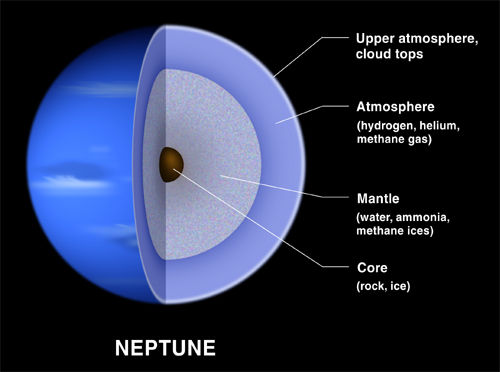
Saturn is mostly made up of hydrogen and helium. Saturn's center consists of dense metals like iron and nickel surrounded by rocky material and other components that are solidified by intense pressure and heat. The center is surrounded by a layer of liquid hydrogen. It formed with the rest of the solar system around 4.5 billion years ago. Saturn is wrapped with clouds and consists of several shades of yellow, greys, and browns. Its upper atmosphere has winds that reach up to 500 meters per second and its magnetic field is about 578 times as powerful as Earth's.
NASA's Pioneer 11, Voyager 1, Voyager 2, and the Huygens Probe were all spacecrafts that have visited Saturn. The Cassini mission that carried the Huygens Probe studied Saturn from orbit for 13 years before it was transformed into a atmospheric probe. From Earth's orbit, the Hubble Space Telescope is still uncovering new details about Saturn.
Fun Facts:
- About two tons of Saturn's mass came from Earth(the Cassini spacecraft that was intentionally vaporized in Saturn's atmosphere in 2017).
- Twice every 29 1/2 years Saturn appears ringless.
- Though one of the largest planets in our solar system, Saturn is the least dense planets.
- Saturn could float in water since it is mostly made of gas.
- The day Saturday was named after Saturn.
Here is a video produced by NASA about Cassini.


Comments